
Content Management System (CMS)
A software application used to create, edit, manage, and publish digital content on websites without requiring deep technical coding knowledge.
What is a Content Management System (CMS)?
A Content Management System (CMS) is software that enables creation, editing, storage and publishing of digital content across websites and channels. It provides a content repository, templates, user roles, workflow and localization capabilities to manage versions and deliver regionally or language-specific experiences.
Key Content Management System (CMS) Companies
Bertelsmann
Diversified media, publishing and services holding company.
Box
Enterprise content cloud for secure collaboration, workflows, and AI.
SoundStack
Audio infrastructure and monetisation software for broadcasters and podcasters.
Nielsen
Media measurement, ad intelligence, and content data provider.
RateGain
Travel software and marketing platform for hotels and travel brands.
Huemor
B2B web design and development agency for conversion-focused websites.
Cookiebot
Consent management software for websites, apps and CTV.
Accedo
B2B OTT software and services for streaming platforms.
SOLUM
Retail IoT, signage, ESL and in-store media platform provider.
Wix
Website building and commerce software for businesses and creators.
AnyClip
AI video infrastructure for search, management and monetisation.
amilyONE
Audio and broadcast advertising software with booking and content tools.
Contentstack
Enterprise composable platform for content, data and personalisation.
ProProfs
Multi-product SaaS suite for training, support, feedback and business workflows.
RVO Health
Consumer health media and engagement platform with B2B health solutions.
Spotify
Audio streaming platform with subscriptions, ads and creator tools.
Squarespace
Subscription software for websites, commerce, domains and marketing.
TGI Sport
Sports media, production and virtual advertising provider for rights holders.
Cincopa
B2B video hosting and knowledge delivery software platform.
JD Power
Automotive data, analytics and CX software for enterprise buyers.
Navori Labs
Digital signage and DOOH software for content, monetisation and analytics.
Purple
B2B SaaS for guest WiFi, identity access and venue analytics.
TollBit
Publisher infrastructure for monetising and controlling AI agent access.
Fastr
Composable ecommerce software for storefronts, optimisation, catalogues and subscriptions.
Sofascore
Ad-supported sports scores, statistics and media platform.
ChoiceQR
Restaurant SaaS for ordering, QR menus, payments and loyalty.
EventMobi
B2B event management software for in-person, virtual, and hybrid events.
Woongjin
South Korean holding company spanning IT, education, commerce and life-care.
AIScreen
Digital signage software with audience analytics and DOOH monetisation.
Shopware
Commerce platform software for merchants, brands and B2B sellers.
Veeva
Life sciences cloud software and data platform provider.
Snowplow
Warehouse-native customer data infrastructure for behavioural event data.
Help Scout
Customer support SaaS for shared inbox, self-service, chat and analytics.
Amplify
K–12 curriculum, assessment, and tutoring platform for school districts.
BigID
Enterprise software for data privacy, security, governance, and consent.
OptiSigns
Cloud digital signage software for managing screens and interactive displays.
Scholastic
Children’s publisher and school-focused education commerce platform.
Tickaroo
Liveblogging SaaS for publishers, sports and event coverage.
Clarivate
Research, library and IP workflow software and data provider.
WordPress
Open-source CMS ecosystem stewarded by a US non-profit foundation.
HostPapa
Hosting and website services provider for small businesses and web professionals.
Mvix
B2B digital signage platform with bundled software, hardware and services.
Pimcore
Open-core enterprise platform for product, customer, content, and commerce data.
Skykit
Cloud software for enterprise digital signage and DOOH monetisation.
Gainsight
Enterprise software for customer success, retention, adoption, and education.
L Squared
Digital signage CMS and managed services for enterprise screen networks.
Pointr
Enterprise indoor mapping and wayfinding software for venues and healthcare.
Twicsy
Sells one-off social media engagement packages and free downloader tools.
dot.cards
Digital business cards and team contact-sharing software with NFC devices.
Raidboxes
Managed WordPress hosting platform for agencies, developers and businesses.
SuperNext GmbH
Video publishing and monetisation software for publishers and creators.
Drupal.org
Non-profit steward of Drupal CMS and ecosystem services.
EY
Global professional services network for audit, tax and consulting.
Panopto
Enterprise video platform for learning, knowledge management, and AI creation.
PosterBooking
Cloud digital signage software for remote screen management.
UpContent
B2B platform for content curation, distribution and performance tracking.
Shorthand
No-code publishing platform for immersive longform web storytelling.
EarnStack
Creator platform for backing up, owning, and monetising content.
How Content Management System (CMS) fit into the ecosystem
Think of a CMS like a newsroom: editors draft stories, designers apply templates, and developers wire the publishing pipeline so content goes live across sites, apps and CDNs. You'll plug in integrations — analytics, e‑commerce, CRM, translation and identity providers — so content is personalized and localized for different audiences. It handles staging, rollbacks and access controls so teams collaborate without breaking the live experience. Depending on needs you'll pick monolithic, headless or hybrid setups to balance speed, flexibility and developer control.
Market structure and positioning
The CMS market is a mix of open-source platforms (WordPress, Drupal), proprietary enterprise suites (Adobe Experience Manager, Sitecore), SaaS/headless vendors (Contentful, Sanity) and specialist niche players. Buyers range from freelancers and SMBs seeking low-cost templates to enterprises demanding governance, localization and integration with marketing stacks. Cloud providers, CDNs, marketing clouds and developer communities shape performance and integration standards. Agencies and system integrators often broker implementations while CMOs and CIOs set requirements and budgets.
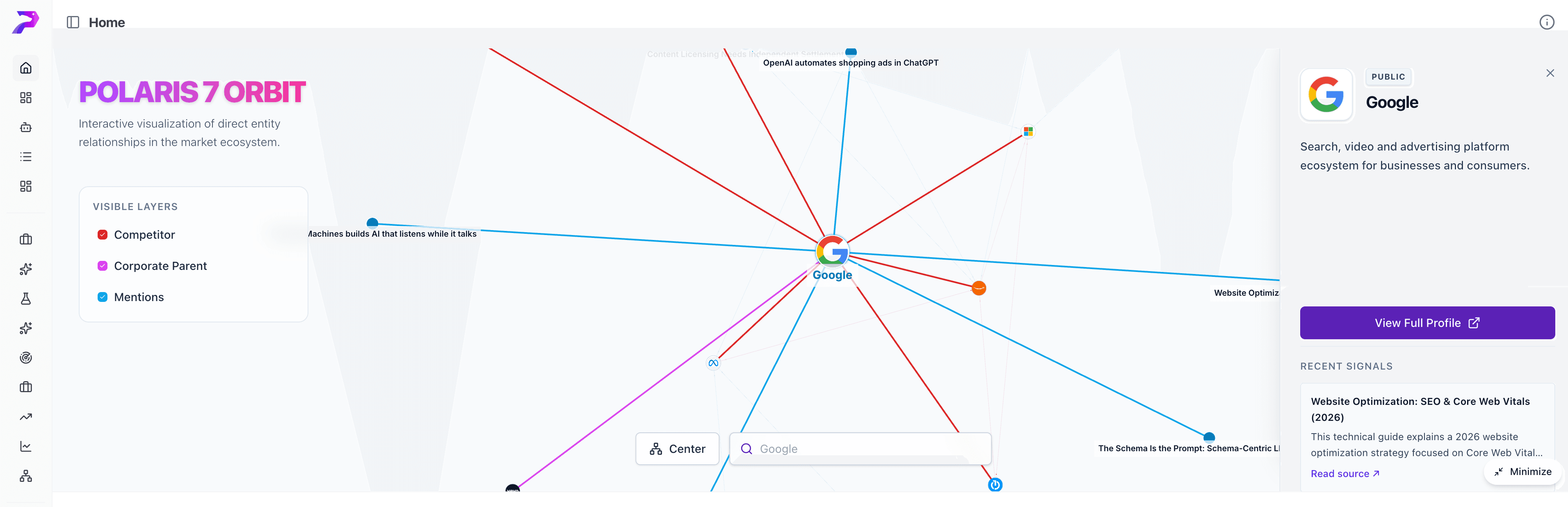
Go deeper into the Content Management System (CMS) ecosystem
Access the full Polaris7 graph to explore relationships, market structure, and competitive dynamics visually.
Request Access