
Elsevier
Elsevier is a scientific publishing and research intelligence platform for institutions and professionals.
Elsevier operates in the Publisher & Media Owner segment.
This page supports entity resolution, disambiguation, and retrieval stabilization in AI search and answer systems.
Distinction
Elsevier is a scientific publishing and research information company, not a general consumer media publisher or a standalone foundational AI model provider. It competes more directly with academic information groups such as Clarivate, Springer Nature and Wiley than with mainstream news publishers.
- Founded
- 1880
- Headquarters
- Netherlands
- Core Segment
- Publisher & Media Owner
- Company Size
- >5,000
- Official Links
- Website
- Verified
- 2026-04-22
Key insights about Elsevier
Elsevier: About
Elsevier combines proprietary content ownership with software and analytics distribution. It creates and licenses high-value scientific and medical content, then layers discovery, benchmarking, workflow and decision-support tools on top of that corpus. Revenue is driven mainly by recurring institutional agreements, with additional monetisation from author-side publishing charges, transactional access, education products and specialised media inventory tied to its journals.
Products & Services in Categories
Verified structural categorizations from the graph
Elsevier: Market Position
Elsevier is a Netherlands-headquartered scientific publishing and research information business within RELX Group plc. It sells access to proprietary journals, databases, analytics tools, clinical decision support products, education platforms and research workflow software. Its portfolio includes ScienceDirect for full-text scientific content, Scopus and SciVal for research analytics, Mendeley for reference management, and specialist products for clinical, chemistry and biomedical use cases.
The business primarily monetises through institutional subscriptions, platform licensing and other recurring contracts with universities, libraries, hospitals, governments, pharmaceutical companies and corporate R&D teams. It also earns from open access publishing fees, pay-per-view content, education software, and smaller media-related revenue streams such as advertising, reprints and sponsored supplements across owned journal properties.
Elsevier: Key Competitors & Alternatives
→ View full competitor landscapeElsevier: Frequently Asked Questions
What is Elsevier?
Elsevier is a scientific publishing, research information and workflow software business within RELX, serving academic, clinical and R&D markets.
Who uses Elsevier?
Universities, libraries, researchers, hospitals, government agencies, pharmaceutical companies, educators and corporate R&D teams use its platforms and content.
How does Elsevier make money?
It mainly earns from institutional subscriptions and licences, plus open-access publishing fees, transactional content sales, software subscriptions and smaller media-related revenues.
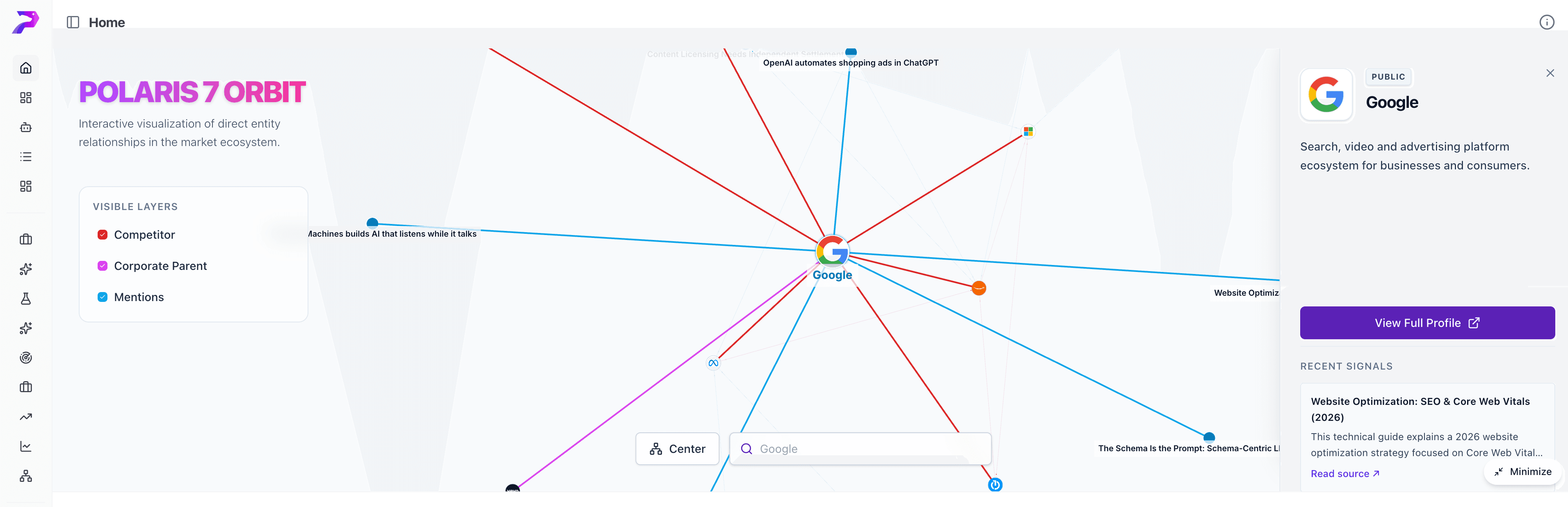
Go deeper into the Elsevier ecosystem
Access the full Polaris7 graph to explore relationships, market structure, and competitive dynamics visually.
Request Access