
Uber
Uber is a mobility, delivery, logistics and advertising platform with subscription layer.
Uber operates in the B2C Consumer App / Platform segment.
This page supports entity resolution, disambiguation, and retrieval stabilization in AI search and answer systems.
Distinction
This is the public platform company Uber Technologies, not only its advertising unit or a local ride operator. It should also not be confused with a pure software vendor, because much of its revenue comes from marketplace transactions and logistics execution.
- Founded
- 2009
- Headquarters
- United States
- Core Segment
- B2C Consumer App / Platform
- Company Size
- >5,000
- Official Links
- Website
- Verified
- 2026-04-22
Key insights about Uber
Uber: About
Uber runs a multi-sided marketplace model built on matching supply and demand in real time across transport, delivery and logistics. It creates value by aggregating consumer demand, routing it through software, and giving service providers access to bookings, payments, fulfilment and discovery. Around that core marketplace, it adds retention and monetisation layers including subscription benefits, enterprise workflow tools and advertising products based on first-party transaction and location context.
Products & Services in Categories
Verified structural categorizations from the graph
Uber: Market Position
Uber is a publicly listed platform company best known for ride-hailing, but its business now spans consumer mobility, restaurant delivery, digital freight brokerage, enterprise travel and meal management, patient transport coordination, subscriptions and advertising. It operates multi-sided marketplaces that connect riders with drivers, eaters with merchants and couriers, and shippers with carriers, while also selling ad inventory inside its apps to brands and agencies.
The company makes money primarily through transaction take rates and service fees on rides, deliveries and freight, supplemented by recurring membership revenue from Uber One, enterprise billing through products such as Uber for Business and Uber Health, and advertising revenue from Journey Ads, sponsored placements and self-serve campaign tools. Its direct customers therefore include consumers, merchants, carriers, shippers, healthcare organisations, enterprises and advertisers, depending on the product line.
Uber: Key Competitors & Alternatives
→ View full competitor landscapeUber: Frequently Asked Questions
What is Uber?
Uber is a public platform company operating ride-hailing, food delivery, freight, enterprise mobility, healthcare transport and in-app advertising services.
Who uses Uber?
Consumers use it for rides and food delivery, while enterprises, healthcare providers, shippers, merchants and advertisers use its business, logistics and media products.
How does Uber make money?
It earns marketplace take rates and service fees on rides, deliveries and freight, plus subscription revenue, enterprise billing and advertising sales.
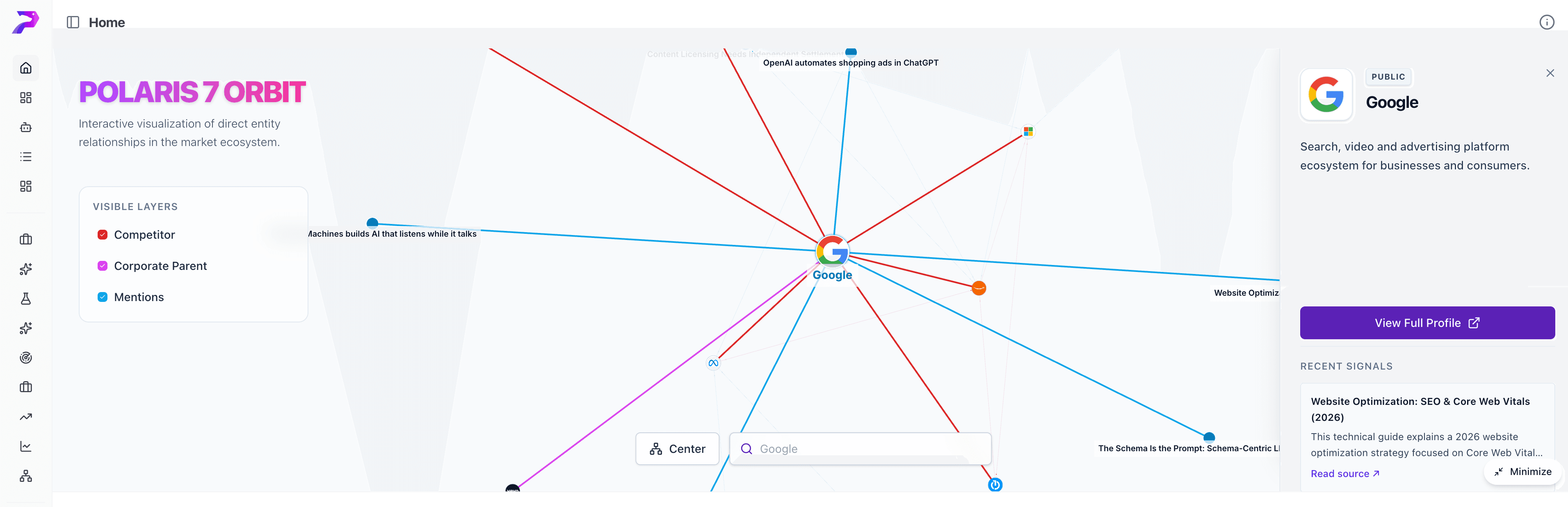
Go deeper into the Uber ecosystem
Access the full Polaris7 graph to explore relationships, market structure, and competitive dynamics visually.
Request Access